How Long Does a Knee Replacement…
The lifespan of a replacement varies with the individual and with use;…
Orthopaedics and Traumatology
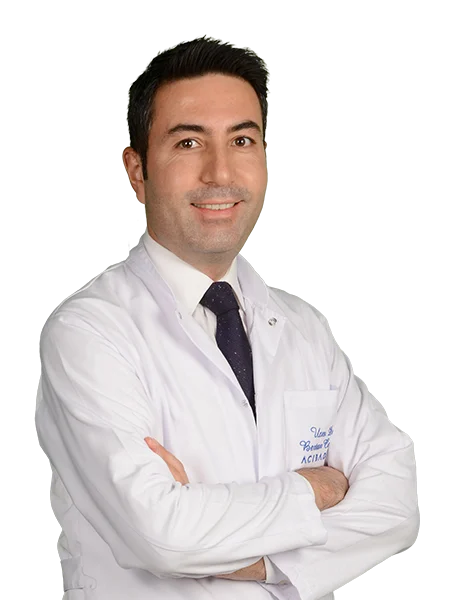
Orthopedic assessment of the knee, shoulder, hip, spine, ankle, sports injuries and trauma — with complaints, examination findings and imaging are evaluated together to plan diagnosis and treatment options.
Understanding the source of pain is the first step of treatment.
Let’s review your complaint and existing reports together at your appointment.
Send a suitable day and your contact details for an examination or check-up.
Mustafa Kemal Paşa Blv. No:1/1-A, Melikgazi/Kayseri — Kayseri
Create a digital appointment via Acıbadem Online.
Describe your complaint and share your imaging and reports so your assessment proceeds more smoothly.
444 55 44
Contact us for appointments and information.
Assoc. Prof. Bertan Cengiz, MD works in orthopedics and traumatology on arthroscopic shoulder, knee, hip and ankle surgery; sports injuries; ligament and meniscus repair; hip and knee replacement; trauma and fracture surgery; pediatric orthopedics; deformity surgery and foot & ankle surgery. With national and international scientific publications, Dr. Cengiz plans treatment according to the patient’s age, activity level, clinical findings and personal needs.
No two patients are assessed the same way; age, activity level and expectations are analyzed together.
Arthroscopic surgery, sports injuries, hip-knee replacement, trauma and foot & ankle surgery.

Orthopedics & Traumatology Specialist
Not every orthopedic complaint has the same cause. Age, activity level, trauma history, imaging findings and daily-life expectations are evaluated together.
Meniscus tears, cruciate ligament injuries, cartilage problems, knee osteoarthritis and post-replacement issues are evaluated.
Rotator cuff tears, shoulder impingement, dislocation, frozen shoulder and sports-related shoulder problems are addressed.
Hip pain, hip osteoarthritis, impingement syndromes and replacement assessments are planned individually.
Ankle sprains, fractures, Achilles tendon injuries, cartilage lesions and sports injuries are evaluated.
MRI or X-ray findings matter; but a correct treatment plan cannot be built without evaluating them together with the patient’s complaint, examination, lifestyle and expectations.
The location, duration, relation to movement and impact on daily life are assessed in detail.
X-ray, MRI, CT or existing reports are interpreted together with the complaint.
Non-surgical treatments, physiotherapy, injection options or the need for surgery are planned individually.
Recovery after treatment is monitored with goals of range of motion, muscle strength and return to daily life.
The goal is not merely to give a diagnostic label, but to explain the source of the problem clearly and evaluate suitable treatment options realistically.
The same MRI finding means different things in different patients; assessment is individual.
Clinical experience supported by national and international scientific publications.
The source of the problem and treatment options are explained clearly.
Recovery is monitored with goals of range of motion, muscle strength and return to daily life.
From your complaint to post-treatment follow-up, the process is simple and planned.

Create an appointment request; bring your existing reports to your visit.
Complaint, examination and imaging are evaluated together.
Treatment appropriate to the clinical condition is planned and the process is monitored.
Create an appointment request and bring your existing MRI, X-ray and reports to your visit.
Below you can find answers to frequently asked questions about orthopedic assessment, diagnosis and treatment.
No. MRI findings must be evaluated together with the patient’s complaint, examination findings and loss of function.
Bringing your existing MRI, X-ray and reports to your appointment helps the assessment. A definitive evaluation is made with examination and necessary tests.
You can request a preliminary assessment by sharing your existing reports and images. This prepares for examination and treatment planning.
If pain affects daily life, or there is swelling, locking, giving-way or inability to bear weight after trauma, an orthopedic assessment is advised.
This decision depends on the degree of curvature, the patient’s age, growth potential and risk of progression.
Some sprains heal quickly; but recurrent sprains, marked swelling, inability to bear weight or instability require evaluation for ligament injury.
3D anatomy visuals and simple explanations are used together to better understand knee, shoulder, hip, spine and ankle problems.
The lifespan of a replacement varies with the individual and with use;…
Protection, ice, compression and elevation in the first days; then early movement…
Three common shoulder problems cause similar pain but have distinguishing features: loss…
You can share your details for an examination, check-up, report review or online preliminary consultation.
444 55 44
Acıbadem Online
This site only uses cookies strictly necessary for it to function. For details, see the Cookie Policy.
